Lithuanian Out Loud is a podcast program that aims to help students with the Lithuanian language. Podcasts come in .mp3 form and correspond with text on a blog, which helps you understand how to read and listen at the same time.
The set up of the podcasts is similar to Pimsleur with speech in English, then in Lithuanian. The podcasts are numerous stretching back to the start of the blog in 2007.
There are many good lessons in the list with perfect native speaker pronunciation in both English and Lithuanian.
The lessons are mostly made for people who are already living in the country or have some knowledge, but combined with a book such as Colloquial Lithuanian or Ne Dienos Be Lietuvu Kalbos, they could be useful for beginners also - especially to get an ear for what the language sounds like.
The authors of Lithuanian Out Loud are not for profit and all the content on the site is free, so support them by taking part in their lessons.
Try it out.
Lithuanian Out Loud
http://lithuanian.libsyn.com/
Friday, 10 July 2009

The sun rises in the east - Lithuanian photographs Japan
Lithuanians are brilliant at visual arts, in particular those who work with video and cameras.
Art experts say that this is the country's forte because Lithuanians suddenly found a swath of electronic equipment flooding into the country after the fall of the Soviet Union, which they took full advantage of.

Visitors to Vilnius during this summer will be able to enjoy one such exhibition of photography.
The Contemporary Art Centre, which has brought Lithuania and Vilnius some of its finest art and exhibitions is opening its new photography exhibition European Eyes on Japan/Japan Today vol.11
Launched in 1999, the European Eyes on Japan/Japan Today takes
European photographers to Japan to discover and document aspects of Japanese contemporary life that local photographers are inured to. In the last ten years, 45 European photographers have visited 30 prefectures of Japan and depicted it in its myriad guises.
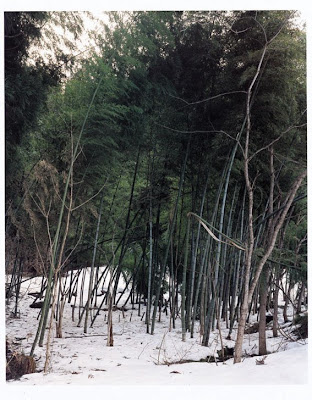
The project is scheduled to continue every year and to take photographers to Japan's 47 prefectures. This is the eleventh project in the series and is a group exhibition of three photographers who visited Niigata prefecture. Arturas Valiauga from Lithuania focuses on everyday food shots in an expressionistic manner using specialised lenses.
Other European artists will also be exhibited. Andrew Phelps from Austria documented people, landscapes, and dwellings, and Hans-Christian Schink from Germany took large-format silver gelatine images to create ghostly landscapes.

European Eyes on
Japan / Japan Today vol.11
Opens July 13 and runs until August 16
Artists: Arturas Valiauga (LT), Andrew Phelps (AT), Hans-Christian Schink (DE)
Curated by: Mikiko Kikuta
Contemporary Art Centre
Vokieciu 2
LT- 01130 Vilnius
Lithuania
www.cac.lt


Thursday, 9 July 2009
Lithuanians step up for the cure (to cancer)!!!
This collaborative video shows people from all over the world, including Lithuania, stepping up for a mass charity exercise to raise money for a cure for cancer.
 Part of the Vilnius European Capital of Culture 2009 (VECC) event is the interactive Haiku poetry competition. People interested in the country with an a creative edge can put their contributions up for the world to see.
It is a continuation of one of Lithuania's proudest traditions: poetry. The country prides itself on its poets and visitors will find that many of the statues and street names in the country are in homage to these masters of the language.
Here are some of the best poems from the contributions for VECC. Enjoy!
For those who don't know, Haiku poetry originates in Japan. The English adaptation of the style requires a three line poem with five, seven and five syllables per line respectively. Other interpretations have the simple rule of a maximum of 17 syllables. Of course poetry is a fluid art form and people have their own interpretations of it.
Here are some of the best poems from the contributions for VECC. Enjoy!
Vilnius alive
a child is born
history meets future
a child is born
history meets future
by Geert Snaet
one and same
a Lithuanian sky
shiver fever
a Lithuanian sky
shiver fever
by Irene Pittatore
Vilnius will always be there’
And I want to be in it
Nothing will change.
And I want to be in it
Nothing will change.
by Neda Malūnavičiūtė
Užupis morning
Locked in sight
Won‘t give it back.
Locked in sight
Won‘t give it back.
by Renata V.
I will walk a narrow street
Back and forth.
The pain is over...
Back and forth.
The pain is over...
by Lukas Bakūnas
More haiku poems can be found at www.culturelive.lt by scrolling to the bottom and clicking on the haiku image (see top right of this blog entry), then selecting English language. You can also contribute your own poems there, or in the comments section of this blog.
What song was it again?
See if you can recognise which song this one copied...
The song Zombiai (1994) is one of the country's biggest hits from esoteric band Antis. The band was very influential and important culturally during the time when Lithuania was struggling for independence. They released their latest album in 2008.
This weeks events for Vilnius European Capital of Culture 2009
 The Vilnius European Capital of Culture 2009 (VECC) event is now well underway with events left right and centre in the capital. It is almost impossible to walk around the city without noticing one of the large green markers telling you about and exhibition or event. The best thing is that almost all of the events are free for all.
There are countless events and mini events, but I have singled out what I believe to be the best things to enjoy in the coming week in Vilnius:
Sculpture: Puskalnis (Half Mountain) by R. Antinis
Neris embankment near the Seimas building, Vilnius
Runs until 31 Dec
Free of charge
Sculpture Dviaukštis (Two-Storey) by M. Navakas
Neris embankment near White Bridge, Vilnius
Runs until 31 Dec
Free of charge
Sculpture Krantinės arka (Embankment Arch) by V. Urbanavičius
Neris embankment near Mindaugas Bridge, Vilnius
Runs until 31 Dec
Free of charge
Network of Footpaths of the Balsiai Mythological Sculpture Park, sculptural park benches
Vilnius
Runs until 31 Dec
Free of charge
EUROPEAN ART SCHOOL NEU/NOW Vilnius’09 - Presentation of the 150 best European art students’ works
www.neunow.eu
Until 31 Aug
Free of charge
NEW CITY FACE - Lithuanian poets’ audio-visual poetry installation 'Poetry Pillar', curated by Julius Žėkas
Vilnius Bus Station,
Sodų St. 22,
Vilnius
Runs until 31 Aug
Mon to Sun
12:00–18:00
Free of charge
EUROPEAN ART SCHOOL - Design for All Latvian Ecodesign Exhibition
Panorama Shopping mall - Saltoniškių St. 9, Vilnius
Runs until 15 Jul
8:00–23:00
Free of charge
EUROPEAN ART SCHOOL - Design for All Exhibition Bruno Award – Best Estonian Design
ContraDesignMuseum, Ševčenkos St. 16A, Vilnius
Runs until 15 Jul
Mon to Fri
10:00–18:00
Free of charge
NEW CITY FACE - Exhibition Ordinary Iconography: Lithuania 1970–1993 by Aušra Petroškienė, Linas Liandzbergis and Rita Mikučionytė
Vilnius Railway Station, Geležinkelio St. 16, Vilnius
Runs until 15 Aug
Mon to Sun
12:00–18:00
Free of charge
KULTFLUX Culture Platform near the Neris - Cinema night
Kultflux pavilion near the Neris and the Lithuanian Energy Museum,
Rinktinės St. 2, Vilnius
7 Jul
21:00
Free of charge
CITY IN THE CINEMA, CITY IN THE CINEMA - Italian feature film review: Roma, città aperta / Rome – the Open City, directed by: Roberto Rosselini, 1945
St. Peter and St. Paul’s Church and the Monastery of Lateran Canons courtyard,
M. Paco St. 4, Vilnius
8 Jul
21:30
Free of charge
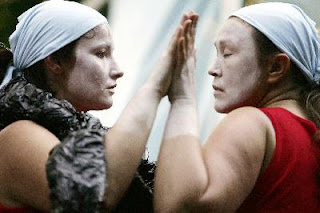
Art Fair ARTVILNIUS’09
Lithuanian Exhibition and Convention Centre LITEXPO,
Laisvės Ave. 5, Vilnius
8–12 Jul
Opening: 18:00
Wed to Fri
11:00–20:00
Fri 11:00–21:00
Sun 11:00–17:00
2–10 litas entrance
52 Weeks. Cinema Marathon
Skalvija Cinema Centre,
A. Goštauto St. 2/15, Vilnius
9 Jul
19:00
6–12 litas entrance
CINEMA IN THE CITY, CITY IN THE CINEMA - Italian film review: Caro diario / Dear Diary, directed by: Nanni Moretti, 1993
St. Peter and St. Paul’s Church and the Monastery of Lateran Canons courtyard,
M. Paco St. 4, Vilnius
9 Jul
21:30
Free of charge
KULTFLUX Culture Platform near the Neris Fishday, electronic music party
Kultflux pavilion near the Neris and the Lithuanian Energy Museum,
Rinktinės St. 2, Vilnius
9 Jul
22:00
Free of charge
52 Weeks. Cinema Marathon
Skalvija Cinema Centre,
A. Goštauto St. 2/15, Vilnius
12 Jul
21:00
6–12 litas entrance
Photography exhibition - European Eyes on Japan
Contemporary Art Centre,
Vokiečių St. 2, Vilnius
13 Jul–16 Aug
Opening: 18:00
Tue to Sun
12:00–19:30
Sun 11:00–17:00
4–8 litas entrance
EUROPEAN ART SCHOOL - Art-o-thlon International Art Championship
Vilnius Academy of Arts, other public places in Vilnius
13 Jul (opening) – 31 Aug
Free of charge
KULTFLUX Culture Platform near the Neris Cinema night
Kultflux pavilion near the Neris and the Lithuanian Energy Museum,
Rinktinės St. 2, Vilnius
14 Jul
21:00
Free of charge
CINEMA IN THE CITY, CITY IN THE CINEMA Polish film review: Kanal / Channel, directed by: Andrzej Wajda, 1957
Holy Trinity Church and the Basilian Monastery courtyard,
Aušros Vartų St. 7B, Vilnius
15 Jul
21:30
Free of charge
HANDICRAFT HERITAGE OF VILNIUS - Educational event Weaving the History of Vilnius: Weavers’ Guild
Geto aukų Square, Rūdninkų St., Vilnius
16 Jul
10:00–18:00
Free of charge
10TH SUMMER CONCERTS - Hevelius Brass Gdansk Brass Quintet
A. Mickevičius Museum courtyard,
Bernardinų St. 11, Vilnius
16 Jul
18:00
Free of charge
52 Weeks. Cinema Marathon Skalvija Cinema Centre,
A. Goštauto St. 2/15, Vilnius
16 Jul
19:00
6–12 litas entrance
CINEMA IN THE CITY, CITY IN THE CINEMA - Polish film review: Zawrocony / Convert, directed by: Kazimierz Kutz, 1994
Holy Trinity Church and the Basilian Monastery courtyard,
Aušros Vartų St. 7B, Vilnius
16 Jul
21:30
Free of charge
KULTFLUX Culture Platform near the Neris Fishday, electronic music party
Kultflux pavilion near the Neris and the Lithuanian Energy Museum,
Rinktinės St. 2, Vilnius
16 Jul
22:00
Free of charge
-----------------------------------------
It should also be noted that Plunge is the Lithuanian capital of culture and is definately worth visiting with different walking trails, concerts and more.
Plungė – Lithuanian Capital of Culture 2009
Different locations in Plungė and district
Runs until 1 Dec
Free of charge
Wednesday, 8 July 2009
Free trips to Lithuania for the well informed
So you have read the Lonely Planet for Lithuania, but how much do you really know about the country and its rich history?
If you have been curious about the country or you just want to test your history knowledge, try the quiz that the Lithuanian Ministry of Foreign Affairs has made.
Winners will get free flights to Lithuania and the ten runners-up will get smaller prizes.
The quiz consists of 15 multiple choice questions about the country's leaders, its wars, its culture and so on. Give it a go and maybe I'll see you at the airport!
Take the quiz in English or Russian at: http://quiz.mfa.lt/
Lithuania turns 1000!
On July 6, Lithuania turned 1000 years old. The country was first mentioned in monk scrolls in 1009 describing a strange land to the East. This is what the Lithuanian President Valdas Adamkus had to say on the occasion of the country's 1000's birthday. (speech text courtesy of www.president.lt)
"Your Majesties, Excellencies, Distinguished Guests of Lithuania,
Dear Fellow People of Lithuania,
My Fellow Citizens of a Thousand Year Old Nation,
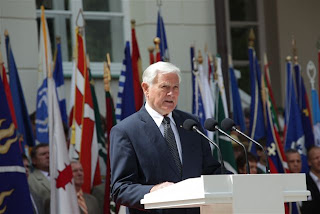 In 1009, five letters were written by the hand of a convent nun: LITUA. These letters signified the name of Lithuania - a name that arrived as news from the fringes of the world discovered and incorporated into European history by Christian missionaries. A woman from Saxony inscribed a passage which has led to today's celebration of the Millennium of Lithuania with its capital city of Vilnius serving as the European Capital of Culture in this jubilee year.
The birth of a nation, like the birth of a person, is symbolized by a name. The emergence of the name of Lithuania witnesses the historical beginnings of a political community and national self-awareness. Lithuania, then and today, is not just a territorial area - it is its people who are aware of belonging to one single nation. This awareness is conveyed not only inside the country, but also through its links with the outside world, which make us richer in knowledge and spirit.
Therefore, when we celebrate the Millennium of Lithuania, we are celebrating our millennium in EUROPE. The marks left by Lithuania on its historical pathway are the First Statute of Lithuania (1529) - which signified a shift towards a new concept of European law, Vilnius University (1579) - which brought the western notion of education to Eastern Europe, the Constitution of Lithuania and Poland (1791) - Europe's first constitution, the Baltic Way (1989) - a human chain symbolizing the freedom loving spirit of the Lithuanian, Latvian and Estonian people, and many other important events.
After the first mention of its name, Lithuania vanished from the civilized world, remaining for several centuries beyond the horizon of Christian missions. This fading away and eventual coming back is the best reflection of our historical life. At times it seemed that Lithuania and Lithuanians might disappear altogether, but as soon as the critical limit was reached, the spirit of the nation would bring the people together and give them courage and strength to stand up once again and fight for freedom. And so it continued for centuries and throughout the millennium.
Today, as we look back from the perspective of a thousand years on the existential efforts of the Lithuanian nation and the pain and sufferings it endured, we sometimes feel sad that the past was not as easy as we would have liked it to be. At the same time, we should be grateful to God, to our history and, of course, to our ancestors that we had escaped the fate of the Old Prussians, Yotvingians and other Baltic tribes that became extinct.
From the times of the Lithuanian State of King Mindaugas to January 13, Lithuania had faced many challenges and lost many lives. However, in critical moments our true values would be always placed at the forefront and we would always know what was of utmost importance to all of us. But in all times, the impelling force of our survival was spiritual strength and solidarity with other nations.
Ladies and Gentlemen,
Today, as I compare the Grand Duchy of Lithuania, which covered a huge territory in Europe, with the European Union, I believe that they are spiritually close formations. All nationalities would find their own place there, enabling them to fulfill their physical and spiritual potential and retain their unique identity. And that is how it is today as well.
Genuine full-fledged existence means people living among people, nations living among other nations, and states coexisting with other states. It means searching for compromises when different interests have to be brought together, but never giving in when addressing fundamental time-tested values. And FREEDOM is the key value. Today Lithuania is happy to celebrate its jubilee together with neighbors and friends. Such openness and solidarity is a perfect pathway to build the future of Lithuania, the Baltic region and Europe. I firmly believe that this experience of ours will be used by the architects of history, just like we are learning from the past of our country, from our victories and defeats.
I bow with respect before all those who are writing the book of our history. I lower my head in gratitude to those who, in all the times and places, protected and protect our country, to those who created and continue to create Lithuania. I extend greetings to Lithuania, crossing the threshold of a new historical era, I send my cordial wishes to all the people of Lithuania, and I welcome our dear friends who have come to celebrate together with us as we open the door to the second millennium.
Welcome LITHUANIA of the New Age!"
H.E. Mr. Valdas Adamkus, President of the Republic of Lithuania
"Your Majesties, Excellencies, Distinguished Guests of Lithuania,
Dear Fellow People of Lithuania,
My Fellow Citizens of a Thousand Year Old Nation,
In 1009, five letters were written by the hand of a convent nun: LITUA. These letters signified the name of Lithuania - a name that arrived as news from the fringes of the world discovered and incorporated into European history by Christian missionaries. A woman from Saxony inscribed a passage which has led to today's celebration of the Millennium of Lithuania with its capital city of Vilnius serving as the European Capital of Culture in this jubilee year.The birth of a nation, like the birth of a person, is symbolized by a name. The emergence of the name of Lithuania witnesses the historical beginnings of a political community and national self-awareness. Lithuania, then and today, is not just a territorial area - it is its people who are aware of belonging to one single nation. This awareness is conveyed not only inside the country, but also through its links with the outside world, which make us richer in knowledge and spirit.
Therefore, when we celebrate the Millennium of Lithuania, we are celebrating our millennium in EUROPE. The marks left by Lithuania on its historical pathway are the First Statute of Lithuania (1529) - which signified a shift towards a new concept of European law, Vilnius University (1579) - which brought the western notion of education to Eastern Europe, the Constitution of Lithuania and Poland (1791) - Europe's first constitution, the Baltic Way (1989) - a human chain symbolizing the freedom loving spirit of the Lithuanian, Latvian and Estonian people, and many other important events.
After the first mention of its name, Lithuania vanished from the civilized world, remaining for several centuries beyond the horizon of Christian missions. This fading away and eventual coming back is the best reflection of our historical life. At times it seemed that Lithuania and Lithuanians might disappear altogether, but as soon as the critical limit was reached, the spirit of the nation would bring the people together and give them courage and strength to stand up once again and fight for freedom. And so it continued for centuries and throughout the millennium.
Today, as we look back from the perspective of a thousand years on the existential efforts of the Lithuanian nation and the pain and sufferings it endured, we sometimes feel sad that the past was not as easy as we would have liked it to be. At the same time, we should be grateful to God, to our history and, of course, to our ancestors that we had escaped the fate of the Old Prussians, Yotvingians and other Baltic tribes that became extinct.
From the times of the Lithuanian State of King Mindaugas to January 13, Lithuania had faced many challenges and lost many lives. However, in critical moments our true values would be always placed at the forefront and we would always know what was of utmost importance to all of us. But in all times, the impelling force of our survival was spiritual strength and solidarity with other nations.
Ladies and Gentlemen,
Today, as I compare the Grand Duchy of Lithuania, which covered a huge territory in Europe, with the European Union, I believe that they are spiritually close formations. All nationalities would find their own place there, enabling them to fulfill their physical and spiritual potential and retain their unique identity. And that is how it is today as well.
Genuine full-fledged existence means people living among people, nations living among other nations, and states coexisting with other states. It means searching for compromises when different interests have to be brought together, but never giving in when addressing fundamental time-tested values. And FREEDOM is the key value. Today Lithuania is happy to celebrate its jubilee together with neighbors and friends. Such openness and solidarity is a perfect pathway to build the future of Lithuania, the Baltic region and Europe. I firmly believe that this experience of ours will be used by the architects of history, just like we are learning from the past of our country, from our victories and defeats.
I bow with respect before all those who are writing the book of our history. I lower my head in gratitude to those who, in all the times and places, protected and protect our country, to those who created and continue to create Lithuania. I extend greetings to Lithuania, crossing the threshold of a new historical era, I send my cordial wishes to all the people of Lithuania, and I welcome our dear friends who have come to celebrate together with us as we open the door to the second millennium.
Welcome LITHUANIA of the New Age!"
H.E. Mr. Valdas Adamkus, President of the Republic of Lithuania
Yummm... (at home!)

Those who have been to Lithuania will know that the country has a very unique and specific cuisine. Did you come in Summer and try Saltibarsciai? Or did you come during the winter and try Cepeliniai?
Instead of leaving this all behind, you can cook them at home with the comprehensive guide Lithuanian Traditional Foods by Birute Imbrasiene.
The book covers all aspects of Lithuanian cooking and gives introductions into the country's food culture. For example, did you know that in traditional Lithuanian families, the girls would only be considered ready for marriage when they were able to cook good black bread?
There are more that 300 authentic recipes in the book that are divided into 14 catagories: Traditional Bread Making, Traditional Cheese Making, Bread, Soups, Meat, Potatoes, Milk, Mushrooms, Fish, Vegetables and Fruits, Grain, Eggs, Baked goods and Sweets and Drinks.
The book carries the stamp of the Lithuanian Culinary Fund verifying its authenticity. I myself have used the book and the food has come out great.
A quirky country
One thing that people will notice when they step of the plane or bus in Lithuania is that everything is a little bit strange. People speak a funny language, the signs look crazy and food tastes different. Watch this video for a bit of an introduction to the country.
The song "Welcome" by the band Inculto was originally intended for Eurovision.
The song "Welcome" by the band Inculto was originally intended for Eurovision.
Enjoy
Subscribe to:
Comments (Atom)

