Showing posts with label vilnius european capital of culture. Show all posts
Showing posts with label vilnius european capital of culture. Show all posts
Friday, 21 August 2009
A realistic look at the capital
Here is a nice little tourism video about the capital city. NB: you will only see the angel and the TVs on the walls if you drink loads of absinthe or take magic mushrooms. Also, nightclubs might not let you in with that hat.

Tuesday, 18 August 2009
An introduction to Vilnius

Writer and historian Laimonas Briedis has released his new book "Vilnius - City of Strangers." The book is a brief history of Vilnius, the capital of Lithuania, but unlike other history books it is fun to read and doesn't seek to impart a purely positive or nationalist view of the city on its readers.
The book is a collection of viewpoints of various writers who visited the city over the last half millennium since city founder Grand Duke Gediminas founded it in the 14th century. Various writings and analyses come from authors from the Vatican, Germany, Russia, Poland and more.
The book aims to show Vilnius today as it has been seen for the last 500 years - as a place of meeting and dispersal. It is a place of connections where people, trains, cultures, languages, and even armies have met.
The city is a gateway from east to west, in terms of both geography and culture. To the west is Europe as they knew it, and to the east is Russia.
Vilnius - City of Strangers is remarkably easy to read for a historical snapshot of one of Europe's richest cultural cities. Writings made over 500 years ago are still poignantly relevant to the lifestyle and habits of the city, whose personality hasn't changed dramatically, despite the changing of tenants uncountable times.
The city has been part of numerous empires throughout history, yet it always managed remain unchanged. Partly protected by the forests, swamps and rivers, only reachable in a bitter winter when the rivers were frozen, the city has always had its own spirit, a spirit that amazed and fascinated visitors.
Although not immediately clear from a Western point of view, it has been the city's contradictory tolerance and intolerance of itself and visitors that has allowed it to survive.
Visitors of today usually get drawn to the city by its seemingly impossible mix of cultures and languages that live in harmony. Vilnius has always been a polyglot city with languages like Polish, Armenian, Turkish, Ukrainian, Russian, German, Yiddish and more being spoken as main languages. Surprisingly, Lithuanian has rarely been the lingua franca of the city - in fact, under German occupation, signs were written in five languages to ensure complete understanding.
This multiculturalism has always been the situation in Vilnius with one exception - today the Jewish community is no longer an integral part of the city.
One of the book's strong points is the exploration of the Jewish culture of Vilnius. The Jewish population of the city once made up around 50 percent of the population - a significant portion compared to today's numbers where the Jews are a minority.
The Jewish population of Vilnius earned it the title of the 'Jerusalem of the North' by visiting rulers and brought prominent writers and thinkers to Vilnius to investigate what they described as the 'Ostjuden.'
Throughout the book are various illustrations that will surprise readers and shed light on the development of Lithuania's capital from being a smattering of hovels to the proud city that it is today.
Perhaps one of the downsides of the book is that it constantly fills in the background of the writers of the memoirs, which sometimes takes the reader far from Lithuania. While this is important to develop the background of the information, it often leaves readers wanting more direct information about the town.
Friday, 14 August 2009
This week in VECC (Aug 14 - 23)
 Halfway through August in Vilnius European Capital of Culture 2009 (VECC) and the event is still rocking out.
It is almost impossible to walk around the city without noticing one of the large green markers telling you about and exhibition or event. The best thing is that almost all of the events are free for all.
This weeks events:
CULTURAL PROGRAMME OF THE FIRST WORLD CONGRESS OF VILNIUKAI: Polish comedy night
Teachers’ House courtyard, Vilniaus St. 39/6, Vilnius
14 Aug
21:30
Free of charge
CULTURAL PROGRAMME OF THE FIRST WORLD CONGRESS OF VILNIUKAI: Concert Folk – Jazz
Vilnius Town Hall Square
15 Aug
17:00
Free of charge
52 Weeks. Cinema Marathon
Skalvija Cinema Centre, A. Goštauto St. 2/15,
Vilnius
16 Aug
21:00
6–12
Art project by Georges Rousse (France) - Creation of installation
Former House of Railway Workers,
Kauno St. 5, Vilnius
17 Aug–3 Sep
11:00–17:00
Free of charge
Exposition - Lithuanian Jewish Child Survivor Talks about Shoah
Tolerance Centre, Naugarduko St. 10/2,
Vilnius
18–31 Aug
Mon to Thu
10:00–18:00,
Sun 10:00–16:00
5 litas
KULTFLUX Culture Platform near the Neris - Cinema night
Kultflux pavilion near the Neris and the Lithuanian Energy Museum,
Rinktinės St. 2, Vilnius
18 Aug
21:00
Free of charge
CINEMA IN THE CITY, CITY IN THE CINEMA - Films by Artūras Barysas
Observation deck in front of Vilnius Sport and Concert Hall,
Rinktinės St. 1, Vilnius
19 Aug
21:30
Free of charge
HANDICRAFT HERITAGE OF VILNIUS - Educational event The Old Wood Processing Craft in Vilnius
Open workshop
Amatų gildija, Pranciškonų St. 6, Vilnius
20 Aug
11:00–19:00
Free of charge
52 Weeks. Cinema Marathon
Skalvija Cinema Centre, A. Goštauto St. 2/15,
Vilnius
20 Aug
19:00
6–12 litas
CINEMA IN THE CITY, CITY IN THE CINEMA - Modern city in Lithuanian cinema: Dviese ant tilto / Two on the Bridge, directed by: Valdas Navasaitis, 2004, Troleibusų miestas / Trolleybus City, directed by: Giedrė Beinoriūtė, 2002
Observation deck in front of Vilnius Sport and Concert Hall,
Rinktinės St. 1, Vilnius
20 Aug
21:30
Free of charge
KULTFLUX Culture Platform near the Neris - Fishday, electronic music party
Kultflux pavilion near the Neris and the Lithuanian Energy Museum,
Rinktinės St. 2, Vilnius
20 Aug
22:00
Free of charge
HANDICRAFT HERITAGE OF VILNIUS - Fair of St. Bartholomew
Vilnius Town Hall Square
20–21 Aug
Free of charge
Audiovisual-multimedia project The Flood Text author: Frido Mann; composer and director: Vladimiras Tarasovas
Contemporary Art Centre,
Vokiečių St. 2, Vilnius
21 Aug
19:00
Free of charge
Kaddish (Requiem)
for Holocaust Victims
Vilnius
23 Aug
Free of charge
52 Weeks. Cinema Marathon
Skalvija Cinema Centre, A. Goštauto St. 2/15,
Vilnius
23 Aug
21:00
6–12 litas
Exhibition of Andrzej Strumillo PAN catalogue TORS. - Presentation of the book Lietuvos Didžioji Kunigaikštystė (The Grand Duchy of Lithuania)
Vladas Vildžiūnas Gallery, Lobio St. 6A, Vilnius
8 Aug–31 Oct
Opening: 16:00
Free of charge
CULTURAL PROGRAMME OF THE FIRST WORLD CONGRESS OF VILNIUKAI: Retrospective and art exhibitions What Was Hidden in the Repatriates’ Suitcases?
House of Polish Culture in Vilnius,
Naugarduko St. 76, Vilnius
9–31 Aug
Opening: 17:30
9:00–18:00
Free of charge
Photography exhibition - European Eyes on Japan
Contemporary Art Centre,
Vokiečių St. 2, Vilnius
Until 16 Aug
Opening: 18:00
Tue to Sun
12:00–19:30
Sun 11:00–17:00
4–8 litas entrance
Sculpture: Puskalnis (Half Mountain) by R. Antinis
Neris embankment near the Seimas building, Vilnius
Runs until 31 Dec
Free of charge
Sculpture Dviaukštis (Two-Storey) by M. Navakas
Neris embankment near White Bridge, Vilnius
Runs until 31 Dec
Free of charge
Sculpture Krantinės arka (Embankment Arch) by V. Urbanavičius
Neris embankment near Mindaugas Bridge, Vilnius
Runs until 31 Dec
Free of charge
Network of Footpaths of the Balsiai Mythological Sculpture Park, sculptural park benches
Vilnius
Runs until 31 Dec
Free of charge
EUROPEAN ART SCHOOL NEU/NOW Vilnius’09 - Presentation of the 150 best European art students’ works
www.neunow.eu
Until 31 Aug
Free of charge
NEW CITY FACE - Lithuanian poets’ audio-visual poetry installation 'Poetry Pillar', curated by Julius Žėkas
Vilnius Bus Station,
Sodų St. 22,
Vilnius
Runs until 31 Aug
Mon to Sun
12:00–18:00
Free of charge
EUROPEAN ART SCHOOL - Art-o-thlon International Art Championship
Vilnius Academy of Arts, other public places in Vilnius
Until 31 Aug
Free of charge
-----------------------------------------
It should also be noted that Plunge is the Lithuanian capital of culture and is definately worth visiting with different walking trails, concerts and more.
Plungė – Lithuanian Capital of Culture 2009
Different locations in Plungė and district
Runs until 1 Dec
Free of charge
Sunday, 2 August 2009
VECC this week (Aug 2-9)
August has rolled around for The Vilnius European Capital of Culture 2009 (VECC) and the event happening everywhere in the capital. It is almost impossible to walk around the city without noticing one of the large green markers telling you about and exhibition or event. The best thing is that almost all of the events are free for all.
This weeks events:
KULTFLUX Culture Platform near the Neris Cinema night
Kultflux pavilion near the Neris and the Lithuanian Energy Museum,
Rinktinės St. 2, Vilnius
4 Aug
21:00
Free of charge
CINEMA IN THE CITY, CITY IN THE CINEMA - French film review: Le Samourai / Samurai, directed by: Jean-Pierre Melville, 1967
Vilnius Franciscan (Friars Minor Conventuals)
Monastery, Trakų St. 9/1, Vilnius
5 Aug
21:30
Free of charge
52 Weeks. Cinema Marathon Skalvija Cinema Centre,
A. Goštauto St. 2/15, Vilnius
6 Aug
19:00
6–12 litas entrance
CINEMA IN THE CITY, CITY IN THE CINEMA - French film review: Les Amants du Pont-Neuf /Pont-Neuf Lovers,
directed by: Leos Carax, 1991
Vilnius Franciscan (Friars Minor Conventuals)
Monastery, Trakų St. 9/1, Vilnius
6 Aug
21:30
Free of charge
KULTFLUX Culture Platform near the Neris - Fishday, electronic music party
Kultflux pavilion near the Neris and the Lithuanian Energy Museum,
Rinktinės St. 2, Vilnius
6 Aug
22:00
Free of charge
Exhibition of Andrzej Strumillo PAN catalogue TORS. - Presentation of the book Lietuvos Didžioji Kunigaikštystė (The Grand Duchy of Lithuania)
Vladas Vildžiūnas Gallery, Lobio St. 6A, Vilnius
8 Aug–31 Oct
Opening: 16:00
Free of charge
ARTSCAPE/United Kingdom/Visual art
Fine arts: Roger Palmer, Eglė Paulina Pukytė
Cinema: Red Shoes, directed by Michael Powell; Life of Brian, directed by: Monty Python; Orlando, directed by: Sally Potter; 39 Steps, directed by: Alfred Hitchcock; The Cook, the Thief, His Wife and Her Lover, directed by: Peter Greenaway (shorts)
Gallery Vartai,
Vilniaus St. 39, Vilnius
Until 8 Aug
Opening: 18:00
Tue to Fri
12:00–18:00
Sat 12:00–16:00
Free of charge
2nd Polish Organ Concert - Henryk Gwardak (Finland-Poland)
Vilnius St. Casimir’s Church, Didžioji St. 34, Vilnius
9 Aug
13:00
Free of charge
52 Weeks. Cinema Marathon
Skalvija Cinema Centre,
A. Goštauto St. 2/15,
Vilnius
9 Aug
21:00
6–12 litas entrance
CULTURAL PROGRAMME OF THE FIRST WORLD CONGRESS OF VILNIUKAI: Retrospective and art exhibitions What Was Hidden in the Repatriates’ Suitcases?
House of Polish Culture in Vilnius,
Naugarduko St. 76, Vilnius
9–31 Aug
Opening: 17:30
9:00–18:00
Free of charge
Photography exhibition - European Eyes on Japan
Contemporary Art Centre,
Vokiečių St. 2, Vilnius
Until 16 Aug
Opening: 18:00
Tue to Sun
12:00–19:30
Sun 11:00–17:00
4–8 litas entrance
Sculpture: Puskalnis (Half Mountain) by R. Antinis
Neris embankment near the Seimas building, Vilnius
Runs until 31 Dec
Free of charge
Sculpture Dviaukštis (Two-Storey) by M. Navakas
Neris embankment near White Bridge, Vilnius
Runs until 31 Dec
Free of charge
Sculpture Krantinės arka (Embankment Arch) by V. Urbanavičius
Neris embankment near Mindaugas Bridge, Vilnius
Runs until 31 Dec
Free of charge
Network of Footpaths of the Balsiai Mythological Sculpture Park, sculptural park benches
Vilnius
Runs until 31 Dec
Free of charge
EUROPEAN ART SCHOOL NEU/NOW Vilnius’09 - Presentation of the 150 best European art students’ works
www.neunow.eu
Until 31 Aug
Free of charge
NEW CITY FACE - Lithuanian poets’ audio-visual poetry installation 'Poetry Pillar', curated by Julius Žėkas
Vilnius Bus Station,
Sodų St. 22,
Vilnius
Runs until 31 Aug
Mon to Sun
12:00–18:00
Free of charge
EUROPEAN ART SCHOOL - Art-o-thlon International Art Championship
Vilnius Academy of Arts, other public places in Vilnius
Until 31 Aug
Free of charge
-----------------------------------------
It should also be noted that Plunge is the Lithuanian capital of culture and is definately worth visiting with different walking trails, concerts and more.
Plungė – Lithuanian Capital of Culture 2009
Different locations in Plungė and district
Runs until 1 Dec
Free of charge
Friday, 31 July 2009
Ignalina - not all that bad
People know Ignalina for the nuclear power plant, but after going there this week, I have found that it is among the most pleasant spots in Lithuania.
View Larger Map
People are amazingly friendly, the city is good looking (outside the Soviet built centre) and it is cheap as hell.
Even those coming from Vilnius will notice how cheap the place is because it isn't a capital city and is off the tourism map.
What many people don't know is that Ignalina, where the country's nuclear power plant is located, is that it is on the edge of the Aukstaitija National Park (ANP). ANP is arguably the country's nicest inland location with beautiful lakes, forests full of berries, wild camping in the forests, fishing and more. ANP was the location for the esoteric Lithuanian film, which is worth seeing, "Aš esu tu".
When I went there, there was good weather, a breeze smelling of fresh forest flowers and great scenery. Perhaps the only bad thing about the city is that its only real restaurant is not easy to find. Of course, once you get there, it will be a great experience - in fact it was probably one of the best Lithuanian restaurant experiences I've had in recent years.
Getting there is really easy too - take the train from Vilnius to get there. The train costs around 15 litas and various discounts are available for those under 26 and more. Check the train website for times.
View Larger Map
People are amazingly friendly, the city is good looking (outside the Soviet built centre) and it is cheap as hell.
Even those coming from Vilnius will notice how cheap the place is because it isn't a capital city and is off the tourism map.
What many people don't know is that Ignalina, where the country's nuclear power plant is located, is that it is on the edge of the Aukstaitija National Park (ANP). ANP is arguably the country's nicest inland location with beautiful lakes, forests full of berries, wild camping in the forests, fishing and more. ANP was the location for the esoteric Lithuanian film, which is worth seeing, "Aš esu tu".
When I went there, there was good weather, a breeze smelling of fresh forest flowers and great scenery. Perhaps the only bad thing about the city is that its only real restaurant is not easy to find. Of course, once you get there, it will be a great experience - in fact it was probably one of the best Lithuanian restaurant experiences I've had in recent years.
Getting there is really easy too - take the train from Vilnius to get there. The train costs around 15 litas and various discounts are available for those under 26 and more. Check the train website for times.
Saturday, 25 July 2009
Unseen Lithuania

Unseen Lithuania is the English version of Neregeta Lietuva, the famous aerial photographic series by Marius Jovaisa.
The whole series is devoted to the landscape of Lithuania from the air.
Lakes, rivers, dunes, islands, churches, cityscapes and more are shown in panoramic photos taken from over 50 helicopter journeys – and like the name of the series suggests, it is something that not many people have seen before or expect from the small Baltic nation.
There are two books available in English – the 2008 and the 2009 editions, but both show excellent scenes of the country. A DVD has also been released with a selection of the best photos from the shoots.
I would personally recommend the books as the best way to go for many reasons – first and foremost is that the book is big and has large and thick pages with the photos in excellent colour and perfect focus. This is not the case with the DVD – there is a very noticeable loss in quality that is off-putting. Plus the photos on the DVD move around in the slide show making them hard to look at.
Perhaps the funniest thing in the series is “Lithuania in the World” where photos from Lithuania are compared to other locations in the world. The only reason I can think for including this is to enforce the nationalist illusion that most Lithuanians have that “our country is the same as everywhere in the world!” Either that, or better than everywhere.
Whats funny about this segment though is that the authors of the series get a photo from some place in the world and get a similar looking photo from Lithuania and place them side by side. For example, a bird’s eye view of a shallow reef in the Maldives is compared to tufts of grass and dirt poking out of a bog in Lithuania. Crystal clear turquoise water compared to muddy brown/green water. Not exactly the same, is it?
Anyway, apart from that terrible mistake they made of comparing mundane geographical locations to world wonders, the series is great and shows the natural beauty of Lithuania and the cities too.
It would make an excellent coffee table book or present.
Tuesday, 21 July 2009
Brilliantly detailed Lithuanian art for VECC
Part of the Vilnius European Cultural Capital 2009 (VECC) are the art exhibitions going on around the centre.

I went to a the Old Town Youth Gallery (my own translation from Lithuanian), which is at Totoriu street, number 22. It is in a small courtyard behind the bar Transylvanija and there is a red plane suspended in the court yard.

Go into the gallery on the left to see some great canvas paintings of Lithuanian life.

I went to a the Old Town Youth Gallery (my own translation from Lithuanian), which is at Totoriu street, number 22. It is in a small courtyard behind the bar Transylvanija and there is a red plane suspended in the court yard.

Go into the gallery on the left to see some great canvas paintings of Lithuanian life.
Monday, 20 July 2009
Upcoming events for VECC
The Vilnius European Capital of Culture 2009 (VECC) event booming in the capital. It is almost impossible to walk around the city without noticing one of the large green markers telling you about and exhibition or event. The best thing is that almost all of the events are free for all.This weeks events:
EUROPEAN ART SCHOOL - Explore Vilnius – Design Vilnius Public lectures
Kultflux platform near the Lithuanian Energy Museum,
Rinktinės St. 2, Vilnius
21–25 Jul
19:00
Free of charge
KULTFLUX Culture Platform near the Neris Cinema night
Kultflux pavilion near the Neris and the Lithuanian
Energy Museum,
Rinktinės St. 2, Vilnius
21 Jul
21:00
Free of charge
ARTSCAPE/United Kingdom/Visual art
Fine arts: Roger Palmer, Eglė Paulina Pukytė
Cinema: Red Shoes, directed by Michael Powell; Life of Brian, directed by: Monty Python; Orlando, directed by: Sally Potter; 39 Steps, directed by: Alfred Hitchcock; The Cook, the Thief, His Wife and Her Lover, directed by: Peter Greenaway (shorts)
Gallery Vartai,
Vilniaus St. 39, Vilnius
22 Jul–8 Aug
Opening: 18:00
Tue to Fri
12:00–18:00
Sat 12:00–16:00
Free of charge
CINEMA IN THE CITY, CITY IN THE CINEMA
Ukrainian film review: Raspad / Collapse, directed by: Mikhail Belikov, 1990
Holy Trinity Church and the Basilian Monastery courtyard,
Aušros Vartų St. 7B,
Vilnius
22 Jul
21:30
Free of charge
52 Weeks. Cinema Marathon Skalvija Cinema Centre,
A. Goštauto St. 2/15, Vilnius
23 Jul
19:00
6–12
CINEMA IN THE CITY, CITY IN THE CINEMA
Ukrainian film review: Mijniki avtomobiliv /Car Washers, directed by: Volodymyr Tykhyi, 2001
Holy Trinity Church and the Basilian Monastery courtyard,
Aušros Vartų St. 7B,
Vilnius
23 Jul
21:30
Free of charge
KULTFLUX Culture Platform near the Neris Fishday, electronic music party
Kultflux pavilion near the Neris and the Lithuanian
Energy Museum, Rinktinės St. 2, Vilnius
23 Jul
22:00
Free of charge
EUROPEAN ART SCHOOL - Explore Vilnius – Design Vilnius Installation exhibition
Lithuanian Energy Museum,
Rinktinės St. 2, Vilnius
25 Jul–1 Aug
Opening: 17:00
Tue to Sun
10:00–17:00
5–10
52 Weeks. Cinema Marathon Skalvija Cinema Centre,
A. Goštauto St. 2/15, Vilnius
26 Jul
21:00
6–12
Sculpture: Puskalnis (Half Mountain) by R. Antinis
Neris embankment near the Seimas building, Vilnius
Runs until 31 Dec
Free of charge
Sculpture Dviaukštis (Two-Storey) by M. Navakas
Neris embankment near White Bridge, Vilnius
Runs until 31 Dec
Free of charge
Sculpture Krantinės arka (Embankment Arch) by V. Urbanavičius
Neris embankment near Mindaugas Bridge, Vilnius
Runs until 31 Dec
Free of charge
Network of Footpaths of the Balsiai Mythological Sculpture Park, sculptural park benches
Vilnius
Runs until 31 Dec
Free of charge
EUROPEAN ART SCHOOL NEU/NOW Vilnius’09 - Presentation of the 150 best European art students’ works
www.neunow.eu
Until 31 Aug
Free of charge
NEW CITY FACE - Lithuanian poets’ audio-visual poetry installation 'Poetry Pillar', curated by Julius Žėkas
Vilnius Bus Station,
Sodų St. 22,
Vilnius
Runs until 31 Aug
Mon to Sun
12:00–18:00
Free of charge
Photography exhibition - European Eyes on Japan
Contemporary Art Centre,
Vokiečių St. 2, Vilnius
13 Jul–16 Aug
Opening: 18:00
Tue to Sun
12:00–19:30
Sun 11:00–17:00
4–8 litas entrance
EUROPEAN ART SCHOOL - Art-o-thlon International Art Championship
Vilnius Academy of Arts, other public places in Vilnius
13 Jul (opening) – 31 Aug
Free of charge
-----------------------------------------
It should also be noted that Plunge is the Lithuanian capital of culture and is definately worth visiting with different walking trails, concerts and more.
Plungė – Lithuanian Capital of Culture 2009
Different locations in Plungė and district
Runs until 1 Dec
Free of charge
Tuesday, 14 July 2009
The wheels on the bus....
Getting around Lithuania can be hard if you don't like taking the bus. While in other countries in Europe, the train reigns supreme, the bus is the best alternative 9 times out of 10 for getting to the place you want to go.
Buses run all of over the country all the time. They aren't cheap when you work in Lithuania and earn the local wages, but for a traveller, the prices will be quite comparable to other countries.
Buses from one side of the country to the other are around 20 euros each way - not really that cheap - but they are frequent and pretty comfortable.
Going internationally also means taking the bus unless you go to Warsaw or Minsk. Buses to Riga are very frequent (at least four per day) and some are equipped with free coffee machines, wireless internet and TVs for watching moves. Keep in mind though that if you don't ask, you don't get. The nice buses, which are called Lux Express, don't cost more, but you need to ask for them.

The bus companies you should know about are Euroline, Ecolines and TOKS. Tickets for all of the are available at the stations before departure or on the bus. When buying on the bus be aware that the drivers sometimes try to cheat people. Get an idea about how much the fare is before you alight - then you know if they are cheating you.
Be aware that there are some people who mirror the routes of the buses with private vehicles - they usually wait outside the bus station and yell the destinations. They are usually the same price as the bus, but can be better. Try this at your own risk.
Have a good ride!
Monday, 13 July 2009
What you will see in Lithuanian clubs
SKAMP is one of the most successful bands of the last decade. They have just finished their latest album Kazka!? and are now working on their next, as well as solo projects.
The band, which plays a mixture of pop, jazz, funk and hip hop, can be seen in Lithuania for as little as 15 litas (4.35 euros) on most nights they perform.
Here is one some from their latest album "Kill you wit my mic"
The band, which plays a mixture of pop, jazz, funk and hip hop, can be seen in Lithuania for as little as 15 litas (4.35 euros) on most nights they perform.
Here is one some from their latest album "Kill you wit my mic"
Sunday, 12 July 2009
Forest walking (and eating!)
One thing visitors to Lithuania will notice is that the locals love to get out into the forest and enjoy the trees, the lakes, the flowers, the mushrooms and many other things.
So many people leave the big cities in search of weekend summer bliss in fact that you could be forgiven for thinking that the city was deserted. So, when in Rome, do as the Romans do.

When driving along the highway in the summer you will see people crouched down next to their pickings waiting for people to stop and buy the fruits of their labour (pun intended). You can negotiate with these people, but be aware that their backs could be sore from picking all day and might drive a hard bargain!
If you aren't happy with their prices though, you can just go into the forest yourself and try your luck.

So many people leave the big cities in search of weekend summer bliss in fact that you could be forgiven for thinking that the city was deserted. So, when in Rome, do as the Romans do.
Getting out of the city will be a rewarding experience:
Fresh air
Animal and bird watching
Berry picking (yum!)
Mushroom picking
Herb picking
Lake swimming and rowing
Camping
Photo opportunities
and so on...
My personal favourite from all of the above is berry picking. There is nothing quite like walking along and stuffing yourself with sweet berries while enjoying the sunshine and the forests.
Wild Strawberries, Blueberries, Raspberries, Cranberries and Cowberries can all be found growing in the wild and are all safe to eat.
When you are out in the forest looking for berries, you might notice other people doing the same. The locals often come to pick the berries as a means of making money. Some grannies and village people are prolific berry pickers and bring home kilos and kilos of berries for freezing, for jams, for eating fresh or even for selling.
When driving along the highway in the summer you will see people crouched down next to their pickings waiting for people to stop and buy the fruits of their labour (pun intended). You can negotiate with these people, but be aware that their backs could be sore from picking all day and might drive a hard bargain!
If you aren't happy with their prices though, you can just go into the forest yourself and try your luck.
After you've had your fill of berries and walking, look for some wild herbs to use when cooking or to dry out and make tea. Thyme is the most common herb along with dill and continental parsley. Once again these are all perfectly edible.
If you know your mushrooms, you can also pick up some chanterelles or champignons, but BE CAREFUL - some mushrooms are deadly and if you don't know what you are doing, it is best not to try. There is an old saying in Lithuania - "All mushrooms in the forest are edible, but some you can only eat once."
Getting out to the forest won't be as hard as you think. Either get a car and just drive somewhere to the forest OR take a train. Many of the train lines in the country go through dense forest where you can get off at a smaller stop and just walk metres to the forest to start walking and picking. Just be careful to find out when the train goes back to the city and make sure you don't go too far from the tracks lest you get lost.
Happy walking and eating!
Thursday, 9 July 2009
 Part of the Vilnius European Capital of Culture 2009 (VECC) event is the interactive Haiku poetry competition. People interested in the country with an a creative edge can put their contributions up for the world to see.
It is a continuation of one of Lithuania's proudest traditions: poetry. The country prides itself on its poets and visitors will find that many of the statues and street names in the country are in homage to these masters of the language.
Here are some of the best poems from the contributions for VECC. Enjoy!
For those who don't know, Haiku poetry originates in Japan. The English adaptation of the style requires a three line poem with five, seven and five syllables per line respectively. Other interpretations have the simple rule of a maximum of 17 syllables. Of course poetry is a fluid art form and people have their own interpretations of it.
Here are some of the best poems from the contributions for VECC. Enjoy!
Vilnius alive
a child is born
history meets future
a child is born
history meets future
by Geert Snaet
one and same
a Lithuanian sky
shiver fever
a Lithuanian sky
shiver fever
by Irene Pittatore
Vilnius will always be there’
And I want to be in it
Nothing will change.
And I want to be in it
Nothing will change.
by Neda Malūnavičiūtė
Užupis morning
Locked in sight
Won‘t give it back.
Locked in sight
Won‘t give it back.
by Renata V.
I will walk a narrow street
Back and forth.
The pain is over...
Back and forth.
The pain is over...
by Lukas Bakūnas
More haiku poems can be found at www.culturelive.lt by scrolling to the bottom and clicking on the haiku image (see top right of this blog entry), then selecting English language. You can also contribute your own poems there, or in the comments section of this blog.
Wednesday, 8 July 2009
Lithuania turns 1000!
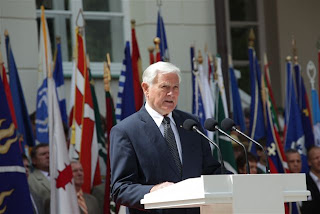
On July 6, Lithuania turned 1000 years old. The country was first mentioned in monk scrolls in 1009 describing a strange land to the East. This is what the Lithuanian President Valdas Adamkus had to say on the occasion of the country's 1000's birthday. (speech text courtesy of www.president.lt)
"Your Majesties, Excellencies, Distinguished Guests of Lithuania,
Dear Fellow People of Lithuania,
My Fellow Citizens of a Thousand Year Old Nation,
 In 1009, five letters were written by the hand of a convent nun: LITUA. These letters signified the name of Lithuania - a name that arrived as news from the fringes of the world discovered and incorporated into European history by Christian missionaries. A woman from Saxony inscribed a passage which has led to today's celebration of the Millennium of Lithuania with its capital city of Vilnius serving as the European Capital of Culture in this jubilee year.
The birth of a nation, like the birth of a person, is symbolized by a name. The emergence of the name of Lithuania witnesses the historical beginnings of a political community and national self-awareness. Lithuania, then and today, is not just a territorial area - it is its people who are aware of belonging to one single nation. This awareness is conveyed not only inside the country, but also through its links with the outside world, which make us richer in knowledge and spirit.
Therefore, when we celebrate the Millennium of Lithuania, we are celebrating our millennium in EUROPE. The marks left by Lithuania on its historical pathway are the First Statute of Lithuania (1529) - which signified a shift towards a new concept of European law, Vilnius University (1579) - which brought the western notion of education to Eastern Europe, the Constitution of Lithuania and Poland (1791) - Europe's first constitution, the Baltic Way (1989) - a human chain symbolizing the freedom loving spirit of the Lithuanian, Latvian and Estonian people, and many other important events.
After the first mention of its name, Lithuania vanished from the civilized world, remaining for several centuries beyond the horizon of Christian missions. This fading away and eventual coming back is the best reflection of our historical life. At times it seemed that Lithuania and Lithuanians might disappear altogether, but as soon as the critical limit was reached, the spirit of the nation would bring the people together and give them courage and strength to stand up once again and fight for freedom. And so it continued for centuries and throughout the millennium.
Today, as we look back from the perspective of a thousand years on the existential efforts of the Lithuanian nation and the pain and sufferings it endured, we sometimes feel sad that the past was not as easy as we would have liked it to be. At the same time, we should be grateful to God, to our history and, of course, to our ancestors that we had escaped the fate of the Old Prussians, Yotvingians and other Baltic tribes that became extinct.
From the times of the Lithuanian State of King Mindaugas to January 13, Lithuania had faced many challenges and lost many lives. However, in critical moments our true values would be always placed at the forefront and we would always know what was of utmost importance to all of us. But in all times, the impelling force of our survival was spiritual strength and solidarity with other nations.
Ladies and Gentlemen,
Today, as I compare the Grand Duchy of Lithuania, which covered a huge territory in Europe, with the European Union, I believe that they are spiritually close formations. All nationalities would find their own place there, enabling them to fulfill their physical and spiritual potential and retain their unique identity. And that is how it is today as well.
Genuine full-fledged existence means people living among people, nations living among other nations, and states coexisting with other states. It means searching for compromises when different interests have to be brought together, but never giving in when addressing fundamental time-tested values. And FREEDOM is the key value. Today Lithuania is happy to celebrate its jubilee together with neighbors and friends. Such openness and solidarity is a perfect pathway to build the future of Lithuania, the Baltic region and Europe. I firmly believe that this experience of ours will be used by the architects of history, just like we are learning from the past of our country, from our victories and defeats.
I bow with respect before all those who are writing the book of our history. I lower my head in gratitude to those who, in all the times and places, protected and protect our country, to those who created and continue to create Lithuania. I extend greetings to Lithuania, crossing the threshold of a new historical era, I send my cordial wishes to all the people of Lithuania, and I welcome our dear friends who have come to celebrate together with us as we open the door to the second millennium.
Welcome LITHUANIA of the New Age!"
H.E. Mr. Valdas Adamkus, President of the Republic of Lithuania
"Your Majesties, Excellencies, Distinguished Guests of Lithuania,
Dear Fellow People of Lithuania,
My Fellow Citizens of a Thousand Year Old Nation,
In 1009, five letters were written by the hand of a convent nun: LITUA. These letters signified the name of Lithuania - a name that arrived as news from the fringes of the world discovered and incorporated into European history by Christian missionaries. A woman from Saxony inscribed a passage which has led to today's celebration of the Millennium of Lithuania with its capital city of Vilnius serving as the European Capital of Culture in this jubilee year.The birth of a nation, like the birth of a person, is symbolized by a name. The emergence of the name of Lithuania witnesses the historical beginnings of a political community and national self-awareness. Lithuania, then and today, is not just a territorial area - it is its people who are aware of belonging to one single nation. This awareness is conveyed not only inside the country, but also through its links with the outside world, which make us richer in knowledge and spirit.
Therefore, when we celebrate the Millennium of Lithuania, we are celebrating our millennium in EUROPE. The marks left by Lithuania on its historical pathway are the First Statute of Lithuania (1529) - which signified a shift towards a new concept of European law, Vilnius University (1579) - which brought the western notion of education to Eastern Europe, the Constitution of Lithuania and Poland (1791) - Europe's first constitution, the Baltic Way (1989) - a human chain symbolizing the freedom loving spirit of the Lithuanian, Latvian and Estonian people, and many other important events.
After the first mention of its name, Lithuania vanished from the civilized world, remaining for several centuries beyond the horizon of Christian missions. This fading away and eventual coming back is the best reflection of our historical life. At times it seemed that Lithuania and Lithuanians might disappear altogether, but as soon as the critical limit was reached, the spirit of the nation would bring the people together and give them courage and strength to stand up once again and fight for freedom. And so it continued for centuries and throughout the millennium.
Today, as we look back from the perspective of a thousand years on the existential efforts of the Lithuanian nation and the pain and sufferings it endured, we sometimes feel sad that the past was not as easy as we would have liked it to be. At the same time, we should be grateful to God, to our history and, of course, to our ancestors that we had escaped the fate of the Old Prussians, Yotvingians and other Baltic tribes that became extinct.
From the times of the Lithuanian State of King Mindaugas to January 13, Lithuania had faced many challenges and lost many lives. However, in critical moments our true values would be always placed at the forefront and we would always know what was of utmost importance to all of us. But in all times, the impelling force of our survival was spiritual strength and solidarity with other nations.
Ladies and Gentlemen,
Today, as I compare the Grand Duchy of Lithuania, which covered a huge territory in Europe, with the European Union, I believe that they are spiritually close formations. All nationalities would find their own place there, enabling them to fulfill their physical and spiritual potential and retain their unique identity. And that is how it is today as well.
Genuine full-fledged existence means people living among people, nations living among other nations, and states coexisting with other states. It means searching for compromises when different interests have to be brought together, but never giving in when addressing fundamental time-tested values. And FREEDOM is the key value. Today Lithuania is happy to celebrate its jubilee together with neighbors and friends. Such openness and solidarity is a perfect pathway to build the future of Lithuania, the Baltic region and Europe. I firmly believe that this experience of ours will be used by the architects of history, just like we are learning from the past of our country, from our victories and defeats.
I bow with respect before all those who are writing the book of our history. I lower my head in gratitude to those who, in all the times and places, protected and protect our country, to those who created and continue to create Lithuania. I extend greetings to Lithuania, crossing the threshold of a new historical era, I send my cordial wishes to all the people of Lithuania, and I welcome our dear friends who have come to celebrate together with us as we open the door to the second millennium.
Welcome LITHUANIA of the New Age!"
H.E. Mr. Valdas Adamkus, President of the Republic of Lithuania
Subscribe to:
Posts (Atom)


